8 Top Picks for Lush, Low-Maintenance Patio Plants
📚 Introduction to Low-Maintenance Patio Gardening
Creating a vibrant and inviting patio space doesn't have to be a time-consuming chore. With the right selection of plants, you can enjoy a lush, green oasis that requires minimal upkeep. This article explores eight excellent choices for patio plants that are both luxurious in appearance and easy to care for, perfect for busy homeowners or those new to gardening. We'll delve into each plant's characteristics, benefits, potential drawbacks, and practical care tips, ensuring you have all the information needed to transform your patio into a low-maintenance paradise. Whether you have a sunny balcony or a shaded courtyard, these picks will help you achieve a thriving outdoor retreat with ease.
Patio gardening offers a fantastic way to bring nature closer to home, enhancing outdoor living areas with beauty and tranquility. Low-maintenance plants are ideal for patios because they reduce the need for frequent watering, pruning, and fertilizing, making gardening accessible to everyone. These plants are typically drought-tolerant, pest-resistant, and adaptable to container growing, which is common in patio settings. By choosing lush varieties, you can create a dense, green backdrop that feels like an extension of your indoor space. In this article, we'll cover eight top picks that combine visual appeal with hardiness, ensuring your patio remains stunning throughout the seasons with minimal effort.
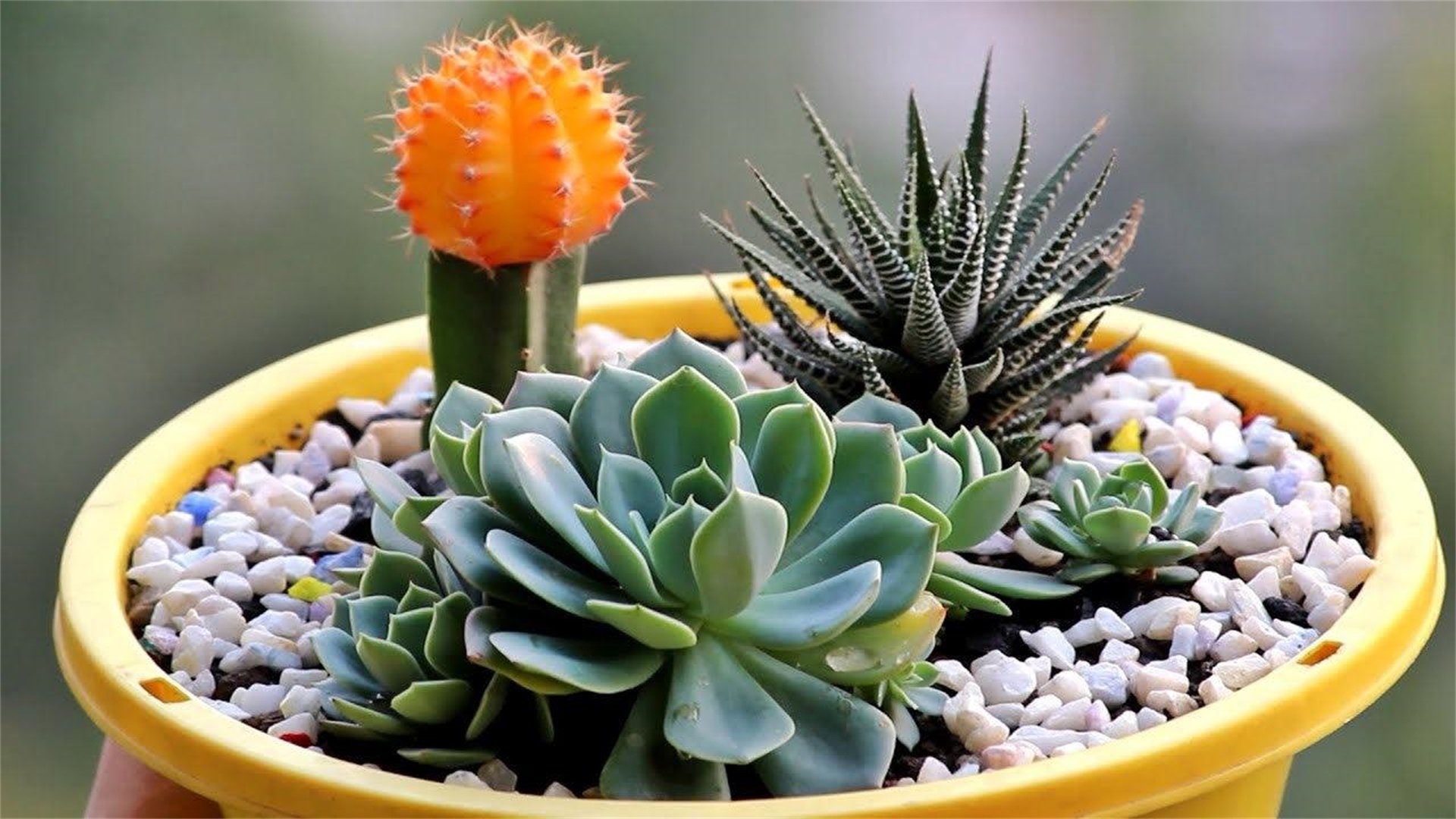
🌵 Succulents (e.g., Echeveria and Sedum)
Succulents are renowned for their fleshy leaves and striking forms, making them popular for patios due to their low water needs and versatility. They come in various shapes and colors, from rosettes of Echeveria to trailing Sedum, adding texture and interest to container arrangements.
Advantages of Succulents
- Succulents are extremely drought-tolerant, storing water in their leaves, which means they can thrive with infrequent watering—perfect for forgetful gardeners.
- They are generally pest-resistant and can adapt to a range of light conditions, though most prefer bright, indirect sunlight.
- Their slow growth rate reduces the need for pruning or repotting, and they propagate easily from cuttings, allowing you to expand your collection without cost.
Disadvantages of Succulents
- Despite their hardiness, succulents can be susceptible to root rot if overwatered, especially in humid climates.
- Some varieties may not tolerate frost, requiring protection or indoor relocation during winter.
- Additionally, their growth can be slow, which might not appeal to those seeking rapid foliage coverage.
How to Grow and Care for Succulents
- Planting: Use well-draining soil, such as a cactus mix, in containers with drainage holes to prevent waterlogging. Place them in pots that complement their size and shape.
- Watering: Water thoroughly only when the soil is completely dry—typically every 1-2 weeks in summer and less in winter. Avoid wetting the leaves to prevent rot.
- Light: Provide at least 4-6 hours of bright, indirect sunlight daily. In hot climates, shield them from intense afternoon sun to avoid scorching.
- Fertilizing: Feed with a balanced, diluted fertilizer once during the growing season (spring or summer) to support health without promoting excessive growth.
- Maintenance: Remove dead leaves periodically and repot every 2-3 years if the plant outgrows its container. Watch for pests like mealybugs and treat with insecticidal soap if needed.
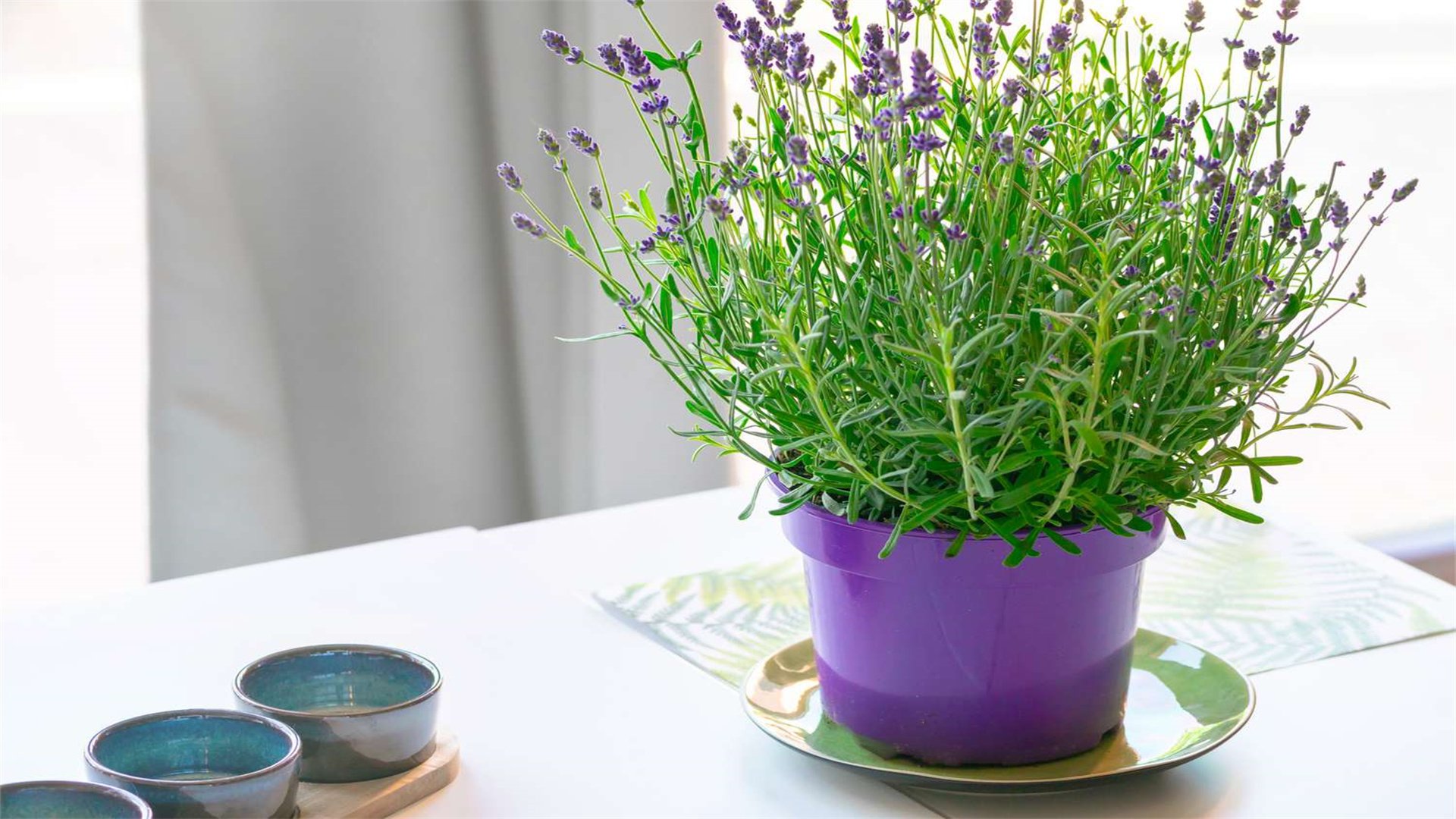
🌸 Lavender (Lavandula)
Lavender is a classic patio plant known for its fragrant purple blooms and silvery-green foliage. It adds a touch of Mediterranean charm and is highly valued for its aroma and pollinator-attracting qualities.
Advantages of Lavender
- Lavender is drought-tolerant once established, requiring minimal watering.
- Its scent naturally repels pests like mosquitoes and moths, making it a functional addition to patios.
- The plant is perennial in many climates, returning year after year with minimal care, and its flowers can be harvested for culinary or craft uses.
Disadvantages of Lavender
- Lavender prefers full sun and well-drained soil, so it may struggle in shady or waterlogged patio conditions.
- It can become woody and leggy if not pruned regularly, and some varieties are sensitive to high humidity or cold winters, potentially requiring protection.
How to Grow and Care for Lavender
- Planting: Choose a sunny spot with at least 6-8 hours of direct sunlight. Use containers with drainage holes and a gritty, alkaline soil mix to mimic its native habitat.
- Watering: Water deeply but infrequently, allowing the soil to dry out between sessions. Reduce watering in winter to prevent root rot.
- Pruning: Trim back spent flowers and about one-third of the growth in early spring to maintain shape and encourage bushier growth. Avoid cutting into old wood.
- Fertilizing: Apply a light, slow-release fertilizer in spring, but avoid over-fertilizing, as this can reduce fragrance and flower production.
- Winter Care: In colder zones, move pots to a sheltered area or mulch around the base to protect roots from frost. Consider growing in movable containers for flexibility.
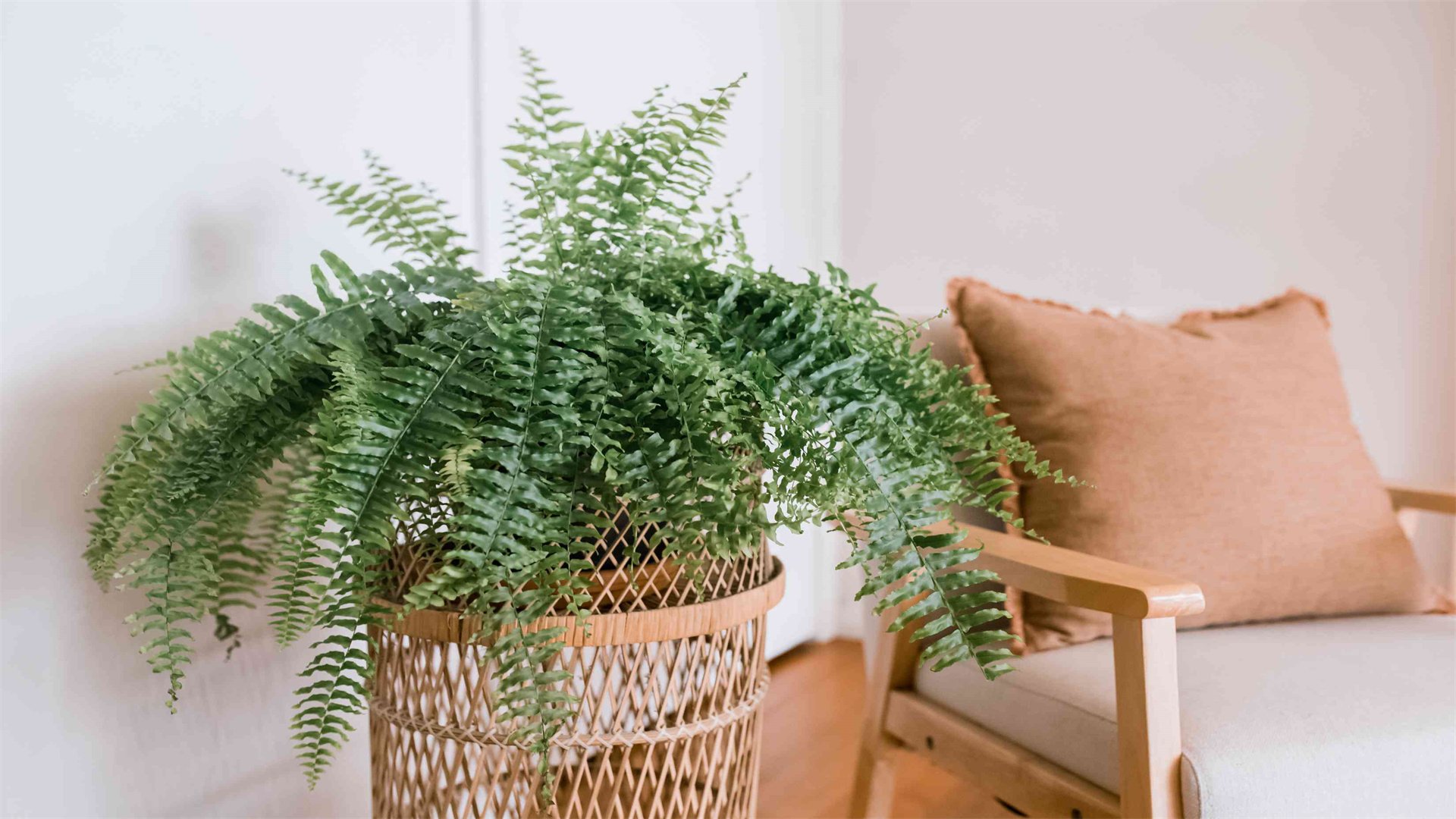
🍃 Boston Fern (Nephrolepis exaltata)
Boston Ferns are lush, feathery plants that thrive in shaded patios, offering a tropical feel with their arching fronds. They are excellent for adding greenery to corners or hanging baskets.
Advantages of Boston Ferns
- These ferns are relatively low-maintenance when provided with consistent moisture and indirect light.
- They are non-toxic and safe around pets, and their dense foliage helps purify air by removing pollutants.
- Boston Ferns grow quickly, filling out containers and creating a full, vibrant display.
Disadvantages of Boston Ferns
- Boston Ferns require high humidity and regular watering, which can be a challenge in dry climates—they may need frequent misting.
- They are sensitive to direct sun, which can scorch their leaves, and they may drop fronds if conditions are too dry or cold.
How to Grow and Care for Boston Ferns
- Planting: Use a peat-based potting mix in containers with good drainage. Place them in shaded or partially shaded areas, such as under a patio overhang.
- Watering: Keep the soil consistently moist but not soggy. Water when the top inch of soil feels dry, and mist the leaves regularly to maintain humidity.
- Light: Provide bright, indirect light; avoid direct sunlight, which can cause browning. They thrive in north- or east-facing patio locations.
- Fertilizing: Feed with a balanced liquid fertilizer diluted to half strength every 4-6 weeks during the growing season (spring to fall).
- Maintenance: Remove yellow or dead fronds to encourage new growth. Repot every 1-2 years to refresh soil and accommodate root growth. In winter, reduce watering and protect from drafts.
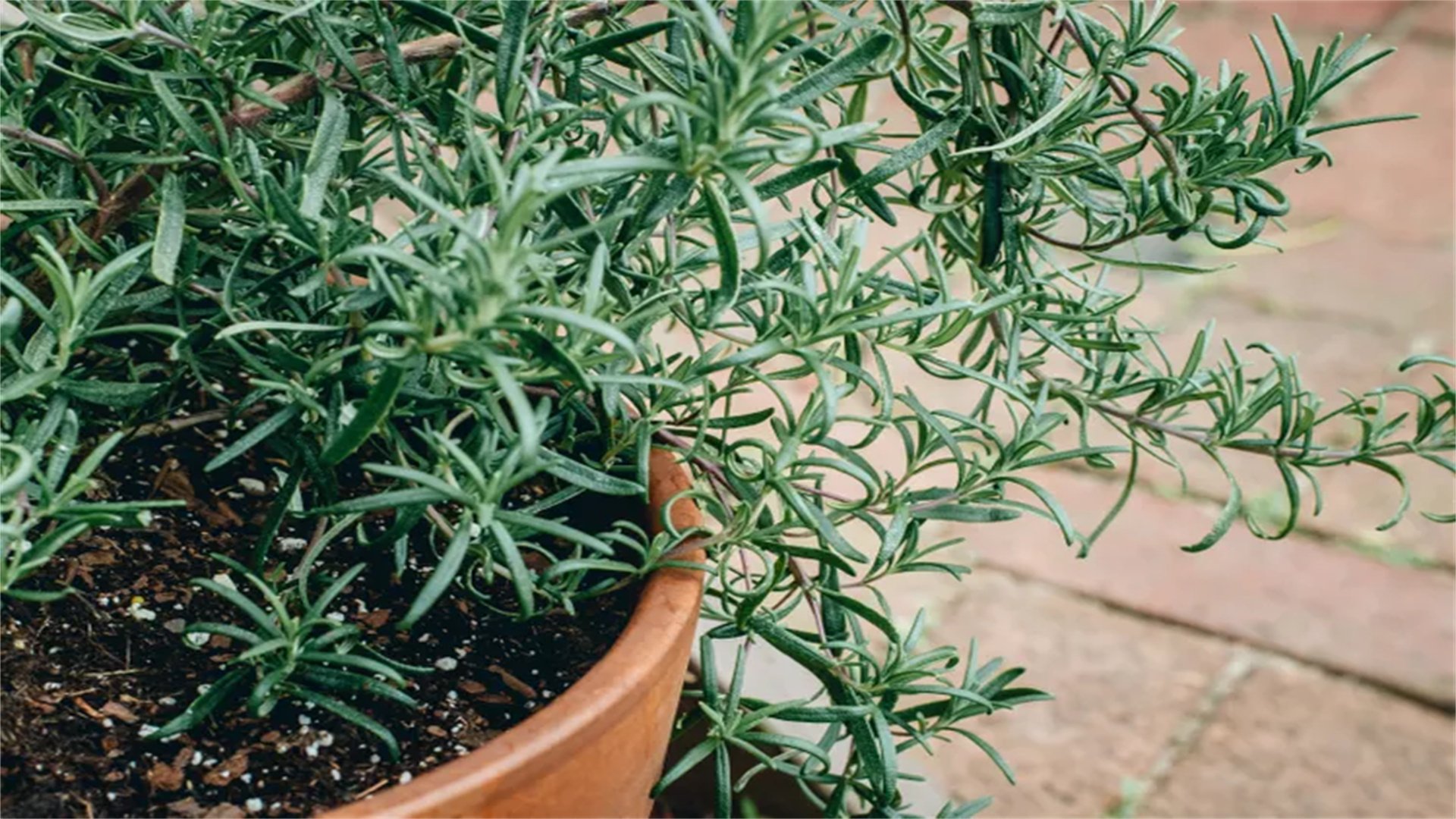
🌿 Rosemary (Rosmarinus officinalis)
Rosemary is a hardy, aromatic herb that doubles as an ornamental patio plant. Its needle-like leaves and small blue flowers add texture and fragrance, and it's versatile for culinary use.
Advantages of Rosemary
- Rosemary is drought-tolerant and thrives in hot, sunny conditions, making it ideal for sunny patios.
- It is pest-resistant due to its strong scent and requires little fertilization.
- The plant is evergreen in mild climates, providing year-round interest, and can be shaped into topiaries or hedges for decorative appeal.
Disadvantages of Rosemary
- Rosemary dislikes wet feet and can suffer from root rot in poorly drained soil.
- It may not survive harsh winters outdoors, so container growing allows for easy relocation.
- In humid areas, it can be prone to fungal diseases like powdery mildew.
How to Grow and Care for Rosemary
- Planting: Use a well-draining soil mix, such as one with sand or perlite, in pots with drainage holes. Place in full sun—at least 6 hours daily.
- Watering: Water when the top inch of soil is dry, but avoid overwatering. Allow the soil to dry out slightly between waterings to mimic its Mediterranean origins.
- Pruning: Harvest sprigs regularly for cooking, which also encourages bushier growth. Prune lightly in spring to maintain shape and remove any dead wood.
- Fertilizing: Apply a balanced, slow-release fertilizer in early spring, or use a diluted liquid fertilizer monthly during active growth. Avoid high-nitrogen feeds that can reduce fragrance.
- Winter Care: In cold climates, move pots indoors to a bright, cool spot or cover with frost cloth. Reduce watering in winter to prevent root issues.
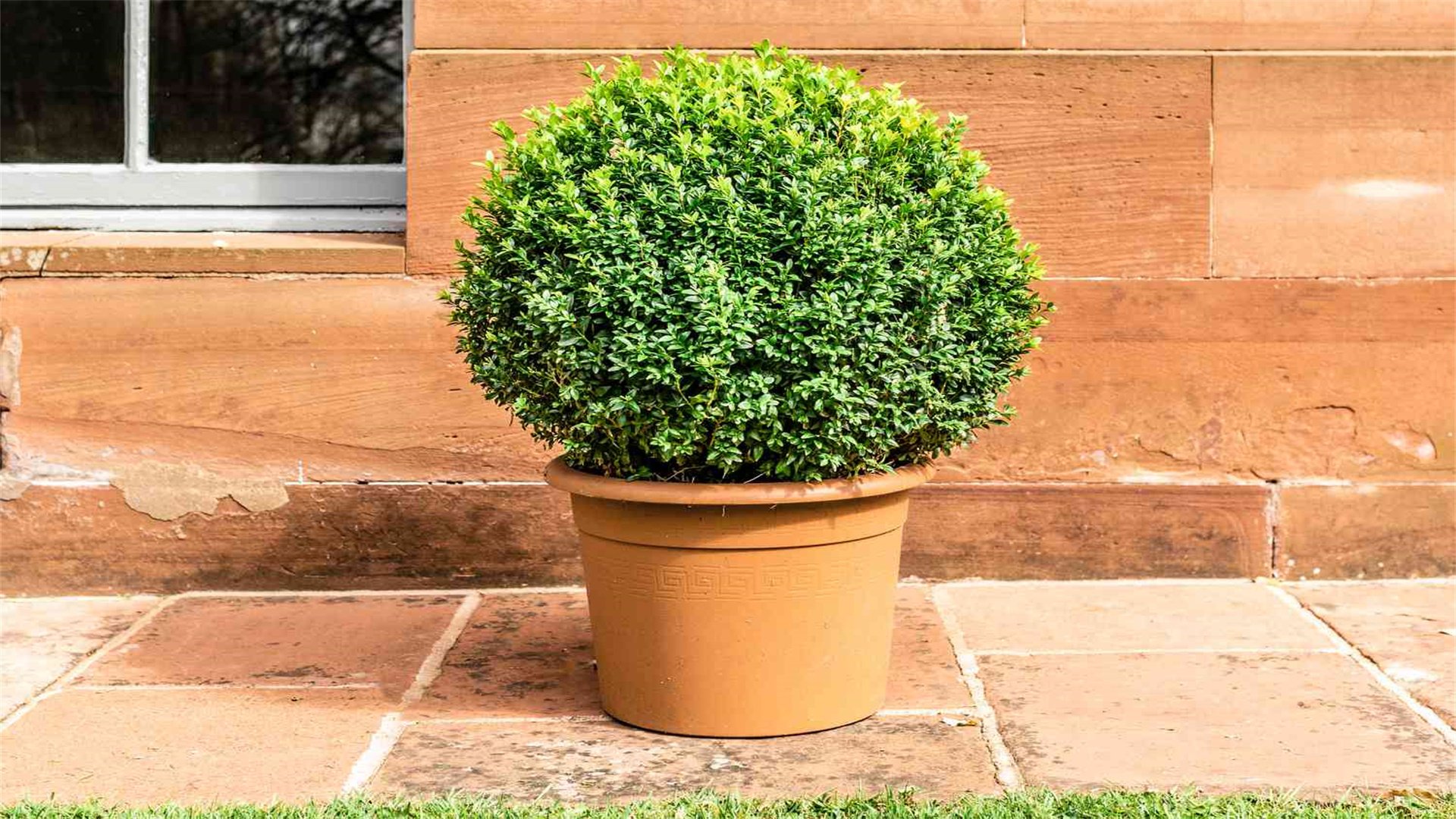
🌳 Boxwood (Buxus sempervirens)
Boxwood is a classic shrub known for its dense, evergreen foliage and ability to be shaped into formal hedges or topiaries. It brings structure and elegance to patio designs.
Advantages of Boxwood
- Boxwood is highly adaptable, tolerating a range of light conditions from full sun to partial shade.
- It grows slowly, reducing the need for frequent pruning, and is relatively pest-resistant when healthy.
- Its compact form makes it ideal for containers, providing a year-round green backdrop.
Disadvantages of Boxwood
- Boxwood can be susceptible to boxwood blight and root rot if overwatered or grown in poor drainage.
- It may require protection from strong winds or extreme cold, and in hot climates, it can suffer from leaf scorch without adequate moisture.
How to Grow and Care for Boxwood
- Planting: Use a well-draining potting mix with organic matter. Choose containers large enough to accommodate root growth, as boxwoods prefer not to be root-bound.
- Watering: Water deeply but infrequently, allowing the soil to dry slightly between waterings. Avoid overhead watering to prevent fungal diseases.
- Light: Provide at least 4-6 hours of sunlight daily, though they can tolerate partial shade. In hot regions, afternoon shade can prevent scorching.
- Pruning: Trim in late spring or early summer to maintain shape, but avoid heavy pruning in fall, as new growth may be damaged by frost. Remove any dead or diseased branches promptly.
- Fertilizing: Apply a balanced, slow-release fertilizer in early spring. Alternatively, use an acid-loving plant fertilizer if soil pH is high, as boxwoods prefer slightly acidic conditions.
- Pest Control: Monitor for pests like boxwood mites or psyllids; treat with horticultural oil or insecticidal soap if infestations occur. Ensure good air circulation to deter diseases.
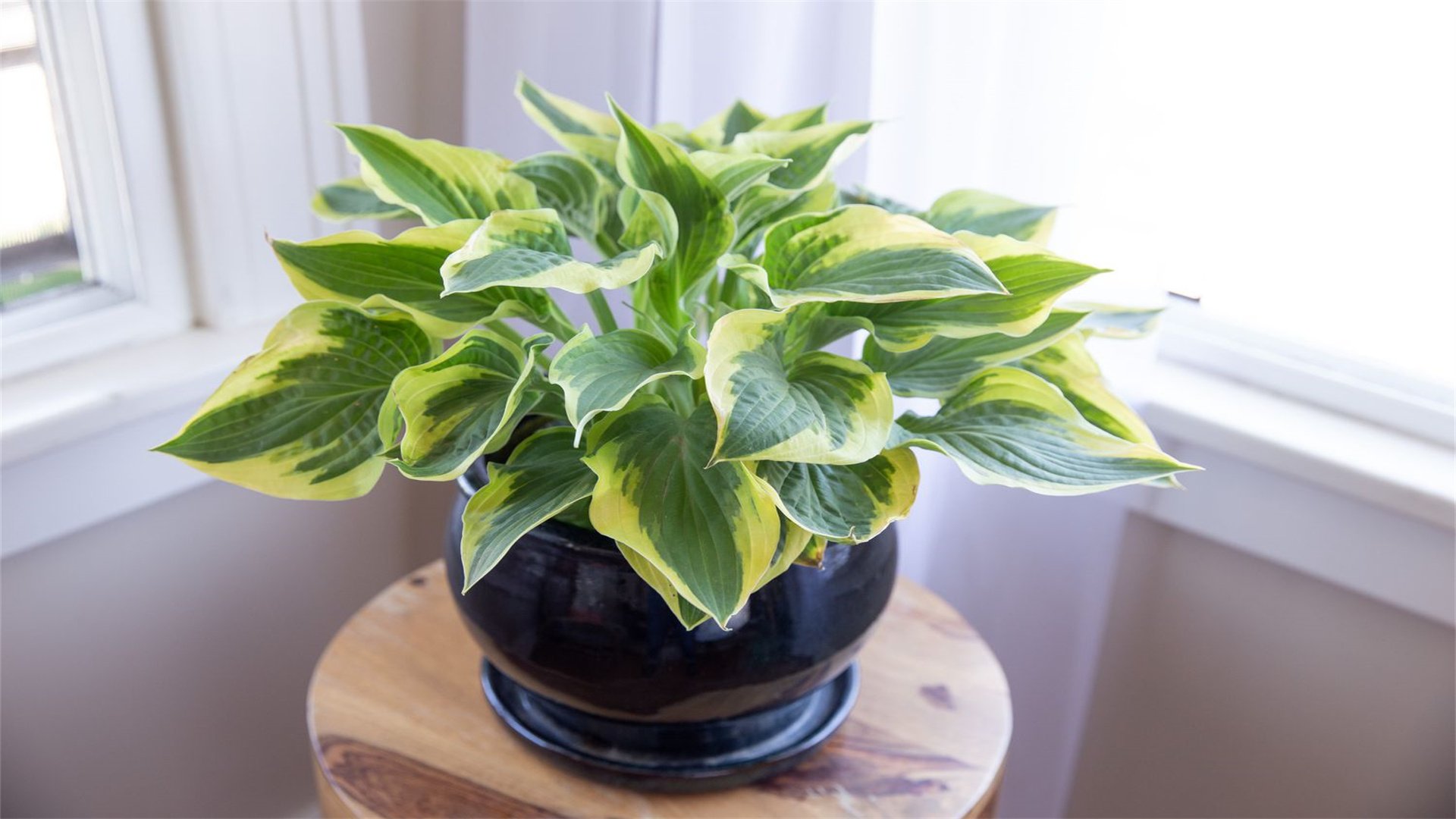
🍀 Hostas
Hostas are shade-loving perennials prized for their large, textured leaves in various shades of green, blue, and variegated patterns. They add a lush, ground-cover effect to patio containers.
Advantages of Hostas
- Hostas are exceptionally low-maintenance, thriving in shaded areas where other plants struggle.
- They are hardy and long-lived, returning each year with minimal care.
- Their foliage provides visual interest from spring to fall, and some varieties produce fragrant flowers that attract pollinators.
Disadvantages of Hostas
- Hostas are prone to slug and snail damage, which can mar their leaves.
- They require consistent moisture and may wilt in dry conditions.
- In sunny patios, their leaves can scorch, so they are best suited for shaded spots.
How to Grow and Care for Hostas
- Planting: Use a rich, well-draining potting mix with organic compost. Plant in wide, shallow containers to accommodate their spreading habit. Place in full to partial shade.
- Watering: Keep the soil consistently moist, especially during hot weather. Water at the base to avoid wetting leaves, which can encourage fungal issues.
- Light: Provide dappled or full shade; avoid direct sunlight, which can cause leaf burn. They excel in north-facing patio areas or under trees.
- Fertilizing: Apply a balanced, slow-release fertilizer in early spring as new growth emerges. Avoid over-fertilizing, which can lead to soft growth susceptible to pests.
- Pest Control: Use organic slug baits or copper tape around containers to deter slugs and snails. Remove damaged leaves and ensure good drainage to prevent rot.
- Division: Every 3-5 years, divide overcrowded clumps in early spring or fall to rejuvenate growth and share with friends.
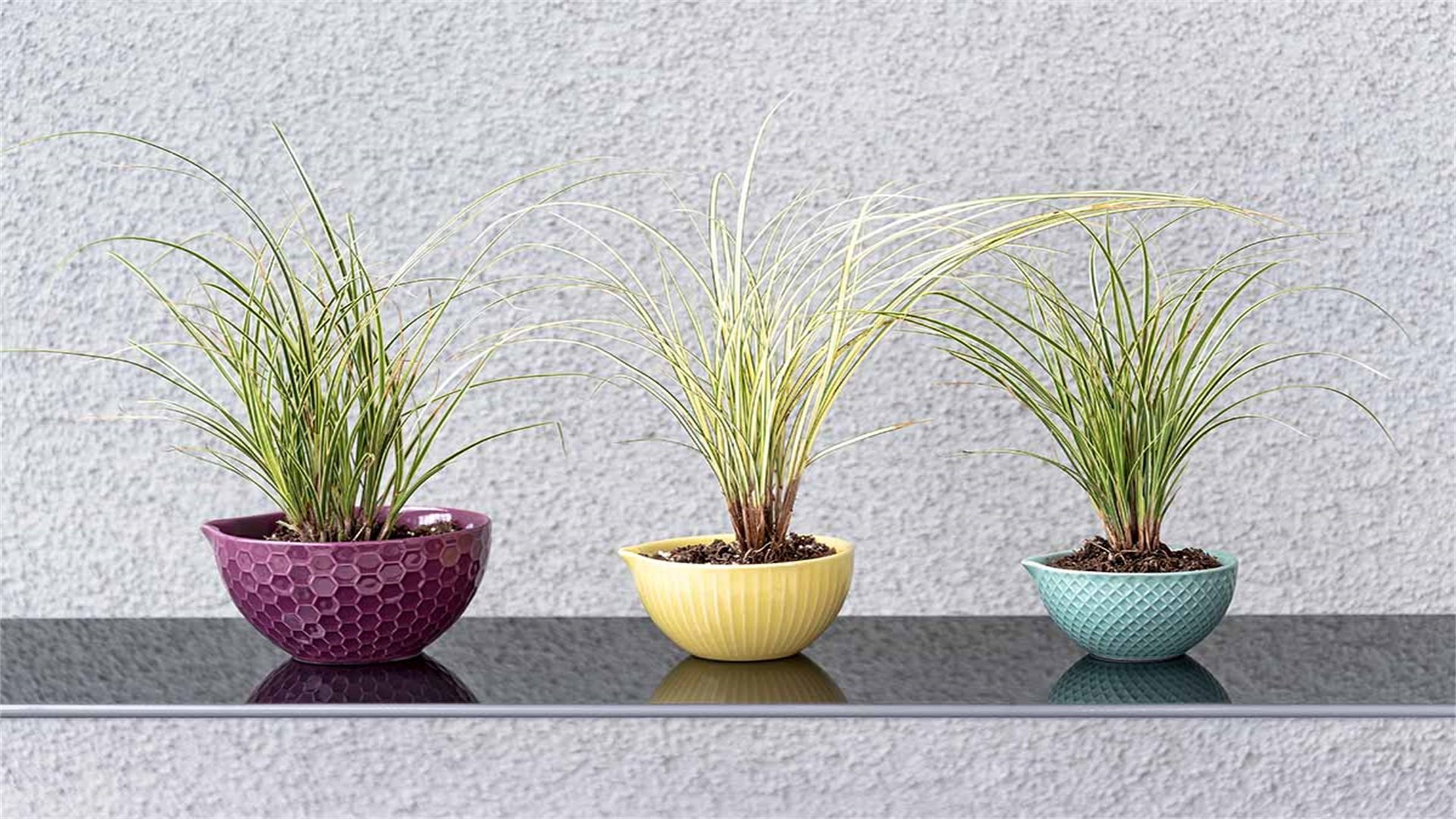
🌾 Ornamental Grasses (e.g., Fountain Grass - Pennisetum)
Ornamental grasses like Fountain Grass add movement and texture to patios with their graceful, arching blades and feathery plumes. They are ideal for creating a modern, low-care landscape.
Advantages of Ornamental Grasses
- These grasses are drought-tolerant once established and require little watering or fertilizing.
- They are generally pest-free and deer-resistant, making them hassle-free.
- Their growth habit provides year-round interest, with seed heads that persist into winter, and they sway gently in the breeze, adding dynamic beauty.
Disadvantages of Ornamental Grasses
- Some grasses can be invasive if not contained, so container growing is ideal.
- They may require cutting back in early spring, which can be messy.
- In very cold climates, tender varieties might need protection or be treated as annuals.
How to Grow and Care for Ornamental Grasses
- Planting: Use a well-draining potting mix in large containers to accommodate root systems. Choose varieties suited to your climate—Fountain Grass is popular for its compact size.
- Watering: Water regularly during the first growing season to establish roots, then reduce to occasional deep watering during dry spells. They are quite drought-tolerant.
- Light: Provide full sun for best growth and plume production—at least 6 hours daily. Some varieties tolerate partial shade but may not flower as prolifically.
- Pruning: Cut back dead foliage to about 4-6 inches above the ground in late winter or early spring before new growth begins. This encourages fresh, healthy blades.
- Fertilizing: Apply a balanced fertilizer in spring if growth seems sluggish, but often they thrive without extra feeding. Avoid high-nitrogen fertilizers that can cause floppy growth.
- Winter Care: In cold regions, leave seed heads for winter interest and cut back in spring. Mulch around the base in pots to insulate roots from freezing temperatures.
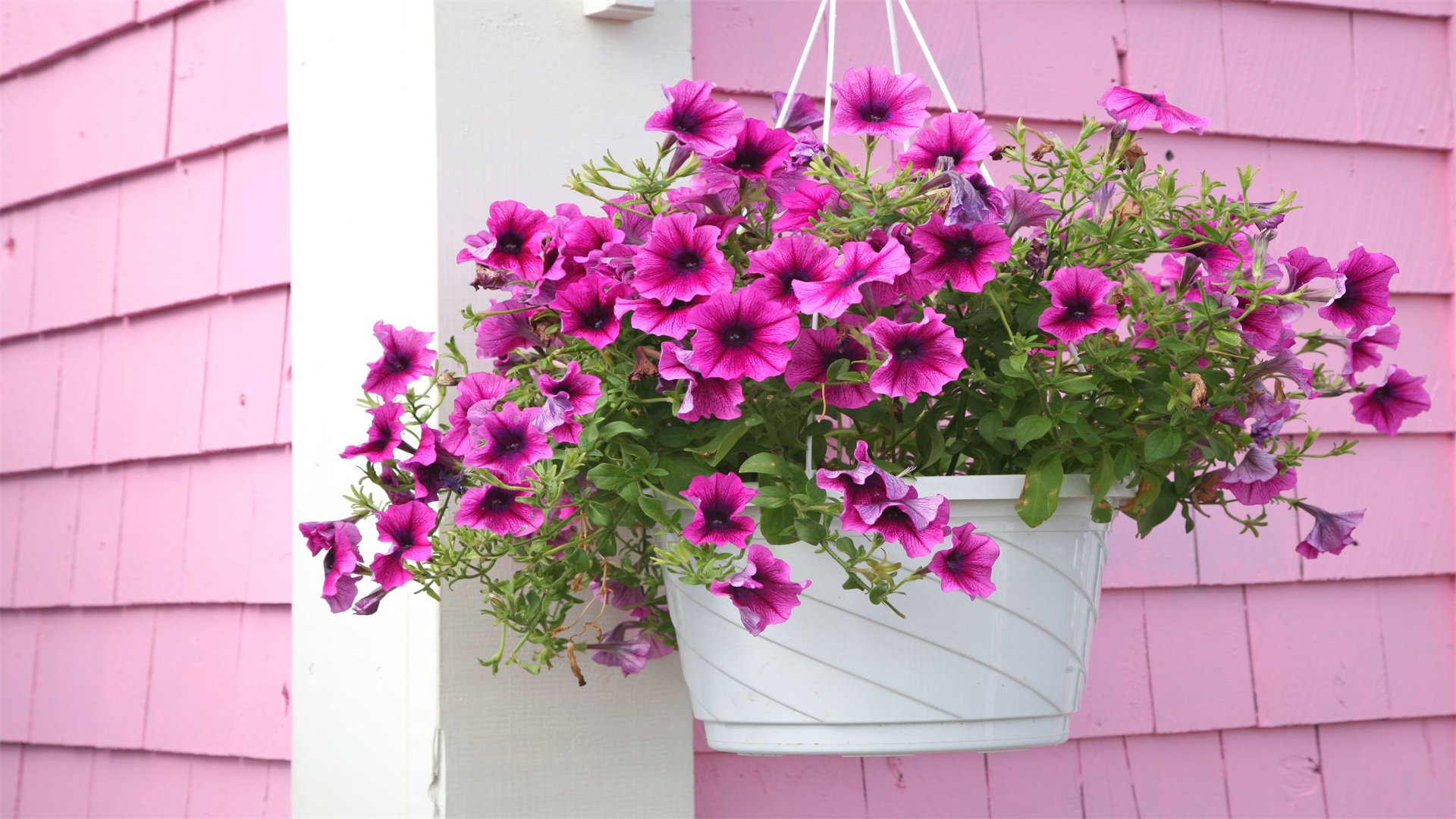
🌺 Petunias
Petunias are colorful annuals that bloom profusely from spring to frost, offering a burst of color in patio containers, hanging baskets, or window boxes. They come in a wide range of hues and patterns.
Advantages of Petunias
- Petunias are easy to grow and provide continuous flowers with minimal deadheading, especially newer hybrid varieties.
- They are heat-tolerant and can thrive in full sun, making them perfect for bright patios.
- Their trailing habit works well for vertical gardening, and they attract butterflies and hummingbirds.
Disadvantages of Petunias
- Petunias require regular watering and fertilizing to maintain blooms, which can be more demanding than other low-maintenance plants.
- They are susceptible to pests like aphids and fungal diseases in wet conditions.
- In many climates, they are treated as annuals and need replanting each year.
How to Grow and Care for Petunias
- Planting: Use a lightweight, well-draining potting mix rich in organic matter. Space plants adequately in containers to allow air circulation and prevent disease.
- Watering: Water regularly to keep the soil evenly moist, but avoid waterlogging. Water at the base to keep foliage dry and reduce disease risk.
- Light: Provide full sun—at least 5-6 hours daily—for optimal flowering. In very hot climates, afternoon shade can prevent wilting.
- Deadheading: Remove spent blooms periodically to encourage new flowers, though many modern cultivars are self-cleaning. Pinch back leggy stems to promote bushiness.
- Fertilizing: Feed with a balanced, water-soluble fertilizer every 2-3 weeks during the growing season, or use a slow-release fertilizer at planting time.
- Pest Control: Monitor for aphids or caterpillars; treat with insecticidal soap or neem oil. Ensure good drainage to avoid root rot or mildew issues.
- Seasonal Care: In frost-free regions, petunias may perennialize; otherwise, replant in spring after the last frost. Consider saving seeds or taking cuttings for next year.
🌟 Conclusion: Creating Your Lush, Low-Maintenance Patio
Selecting the right plants is key to achieving a thriving patio garden with minimal effort. The eight picks highlighted here—Succulents, Lavender, Boston Fern, Rosemary, Boxwood, Hostas, Ornamental Grasses, and Petunias—offer a diverse range of textures, colors, and growing conditions to suit any patio environment. By focusing on drought-tolerant, pest-resistant, and adaptable species, you can reduce watering, pruning, and fertilizing tasks while enjoying a lush, green retreat. Remember to consider your patio's light exposure, climate, and container choices when planning. With proper initial setup and occasional care, these plants will provide year-round beauty, enhancing your outdoor space for relaxation and entertainment. Start with one or two varieties and expand as you gain confidence—your low-maintenance patio paradise awaits!
In summary, low-maintenance patio gardening is all about smart plant selection and simple care routines. These eight plants are proven performers that balance visual appeal with hardiness, ensuring your patio remains an inviting oasis without demanding constant attention. Whether you're a seasoned gardener or a beginner, incorporating these picks will help you create a sustainable and stunning outdoor area that you can enjoy with ease.